Home/News/Gujarat Titans Set Negative Records in IPL 2026 Final
IPL 2026 Final · Match Report
Gujarat Titans Set Negative Records in IPL 2026 Final vs Royal Challengers Bengaluru
A top-order collapse that ended at 155 for 8, the longest wait for a first six of an IPL season, and a 40-ball boundary drought in a final — the numbers behind Gujarat Titans' defeat to Royal Challengers Bengaluru at the Narendra Modi Stadium.
Narendra Modi Stadium in Ahmedabad hosted the IPL 2026 final between Gujarat Titans and Royal Challengers Bengaluru on May 31, 2026.
Compliance Notice: Fantasy cricket involves skill and strategy. 18+ only, in permitted Indian states. Play responsibly.
Gujarat Titans lost the IPL 2026 final by posting 155 for 8 against Royal Challengers Bengaluru at the Narendra Modi Stadium on May 31, and the innings closed with three statistical entries that the side, the venue, and the tournament had not seen before in this combination. The top three of Shubman Gill, Sai Sudharsan and Jos Buttler were all dismissed inside the six-over powerplay, the team did not clear the ropes until the fourth ball of the 13th over, and the gap between a four in the sixth over and the first six of the innings ran to 40 balls — the longest boundary drought recorded in an IPL final.
Each of those records is small on its own. Taken together they describe an innings that never settled, never threatened, and never came close to the 180-plus totals that had become Gujarat Titans' signature through the back half of IPL 2026. The collapse also tightened a pattern that had already been visible across the season: it was the fourth time this campaign that Gujarat Titans lost all three top-order batters in the powerplay, and three of those four instances came against Royal Challengers Bengaluru.
The final, in other words, did not invent the problem. It put the problem on the biggest stage of the season, with the trophies in the dugout and the broadcast cameras on every shot.
The powerplay that ended the chase before it began
Gill, Sudharsan and Buttler had been Gujarat Titans' most reliable combination through the league stage. The three accounted for the bulk of the powerplay scoring that powered the side into the playoffs, and the match-up plans across the season had been built around getting at least one of them set in the first six overs. In the final, none of them reached the tenth over. The first wicket fell in the third over, the second in the fifth, and the third before the powerplay ended — a sequence that left the middle order exposed against a Royal Challengers Bengaluru attack that did not need to take risks to defend a total that had not yet been set.
The reading the Titans had used against the Bengaluru attack in the three previous meetings this season was the same: keep wickets in hand through the powerplay, target the short square boundary, and let the middle overs take care of themselves. Royal Challengers Bengaluru had other ideas on the night. The new ball moved enough off the surface to ask questions of the bat, the field was set to cut off the boundary options that had worked in earlier fixtures, and the bowling pair that opened the innings did not give the freebies that had allowed Gill to find rhythm in the league stage.
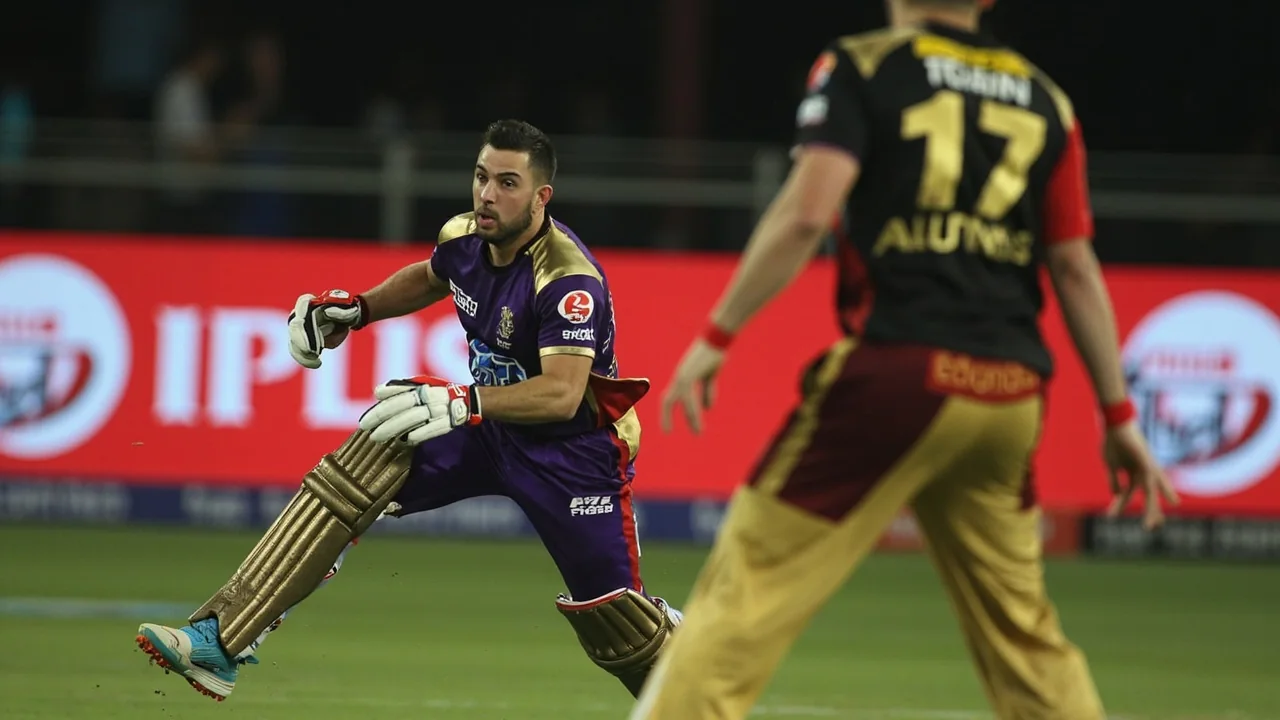
A top-order collapse inside the powerplay put the Gujarat Titans middle order on the front foot from the first over of the IPL 2026 final.
The pattern is more striking when it sits next to the rest of the season. Four powerplay collapses in a single campaign is unusual for any side; four with three of them against the same opponent is a structural read, not a coincidence. The Bengaluru attack has pace, accuracy and a left-arm option that has consistently troubled the right-handers at the top of the Titans order, and the Titans had not solved that match-up on the nights it mattered most.
A first six that took more than twelve overs to arrive
Arshad Khan struck Gujarat Titans' first six on the fourth ball of the 13th over, and the wait was the longest any team has taken to clear the ropes in IPL 2026. Twelve overs and two balls of caution against an attack that was content to bowl to a field set for dots is a long time in a T20 innings, and the hold-up said as much about the field placements Royal Challengers Bengaluru chose as it did about the Titans' inability to find the gaps early.
The arithmetic of the boundary drought is the more uncomfortable number. Nishant Sindhu had hit a four in the sixth over, and the gap between that boundary and Arshad Khan's six ran to 40 deliveries — the longest boundary drought recorded in an IPL final. Boundary hitting is the currency that converts a quiet start into a competitive total in this format, and a 40-ball stretch without one is enough on its own to explain why a side batting first ends up well short of par.
Sindhu's contribution was real even within that drought. He made 20 from 18 balls with three fours, which means half of his scoring shots were boundaries, and the rate at which he found the rope was the closest the Titans came to momentum through the middle phase. The issue was not that the boundaries were not coming at all; it was that they were coming in clusters at the wrong end of the innings, with the batting powerplay already behind them.
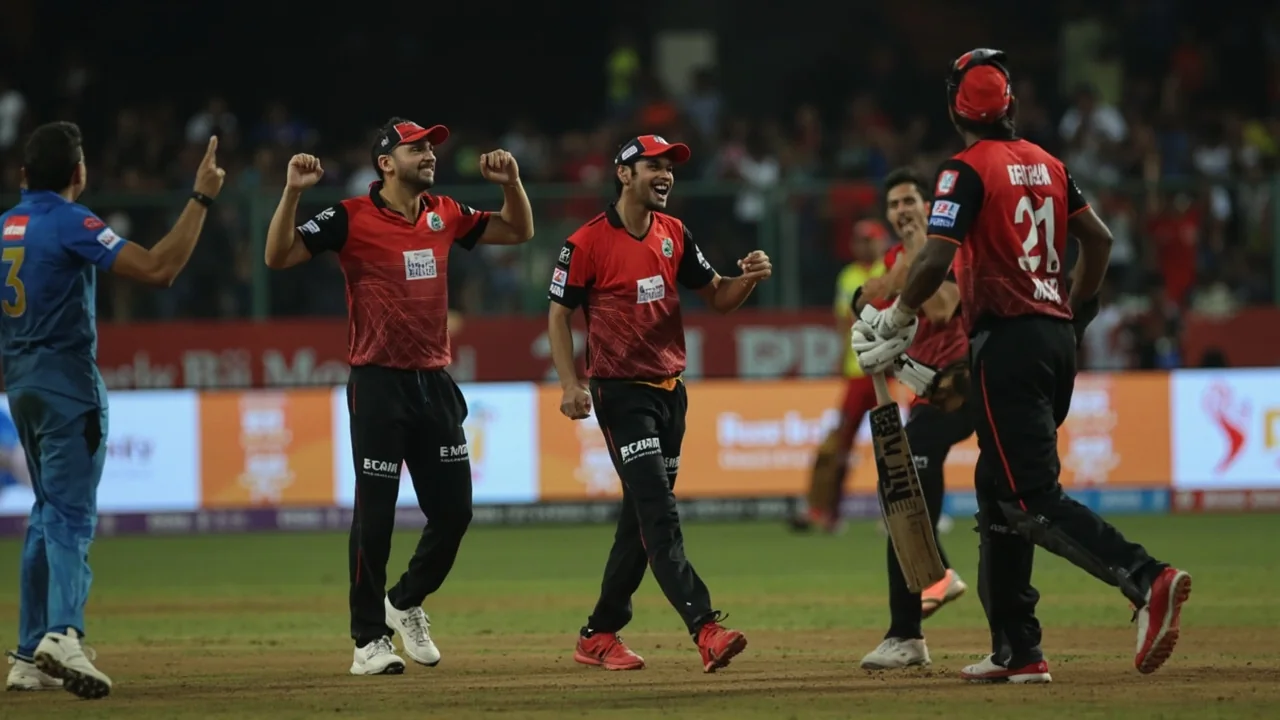
Royal Challengers Bengaluru's bowling lengths and field placements kept Gujarat Titans searching for the boundary in the middle overs.
There is a knock-on effect that the scorecard does not always capture. A side that has not cleared the ropes by the 13th over has burned a lot of dot balls, and dot balls force the lower middle order to take risks that compound the original problem. The Bengaluru attack did not need to take a wicket to extend the drought; the dot ball did the same job, and the bowlers rotated without conceding the easy boundary that might have released the pressure.
Washington Sundar's innings in context
Sundar made 50 from 37 balls with five fours, and that is the line of the card that most accurately describes where Gujarat Titans were competitive in the innings. He came in at a stage where the side was already three wickets down in the powerplay, with the bowlers holding the length and the field spread to cut off the aerial options that usually unlock a chase-friendly total. His fifty was the only one of the innings, and it was also the first time in the back half of the tournament that he had been asked to anchor rather than accelerate.
The numbers around the fifty are worth noting. A run-a-ball fifty in a T20 final is below the par strike rate for a set batter, but it was the right tempo for the situation Sundar walked into: take the innings deep, rotate the strike, and let the batters around him take the bowling on. That is exactly what he did for the first 30 balls of his innings, and the acceleration that came in the final ten balls of his stay pushed the total past 150, which was at least a workable target on a surface that was still holding for the slower bowlers.
The partnership Sundar built with Arshad Khan through the middle overs was the only sustained stretch of the innings where the Titans looked like they might push past the 160 mark. The follow-on batters did not have enough batting time to convert the late momentum into a finishing kick, and the side closed at 155 for 8 rather than at the 175-plus range that had been the average first-innings score at the venue in the back half of the league stage.
How Royal Challengers Bengaluru's bowlers shared the night
Rasikh Salam Dar finished with 3 for 27, Bhuvneshwar Kumar took 2 for 29, and Josh Hazlewood took 2 for 39. The three of them shared seven of the eight wickets to fall, and the variety in their roles is the clearest indicator of why the Titans never found a rhythm. Salam Dar took the new ball and used the early movement to ask questions of the top order. Bhuvneshwar Kumar worked the middle phase with his changes of pace. Hazlewood closed out the innings at the death with the kind of hard lengths that prevent the boundary hitting the lower order needs to push the total past 170.
It is the kind of distribution that does not show up in any single bowler's figures but explains the innings as a whole. The Titans had to face a different tempo in every phase: hard lengths in the powerplay, slower variations in the middle overs, and hard lengths again at the death. None of the three needed a standout spell on his own; the spells in aggregate left the batters searching for the right tempo for the whole innings and finding none.
Hazlewood's two wickets at the death are the under-discussed number in the card. A bowler of his accuracy at the back end of a T20 innings compresses the scoring options for the lower order, and the two wickets he took in the final two overs were the difference between a competitive chase target and a routine one. Without those wickets, the Titans would have closed closer to 165. With them, the side closed at 155, and the chase that followed was on from the first over.
What the season-long pattern says
Four powerplay collapses in a season tells a story about both the batting order and the opposition attack that has worked it out. The Titans' top three have the technique to handle the new ball across most conditions, and the squad selections through the season had been built to give them long enough at the crease to set the platform. The Bengaluru attack, with three of those four collapses now in the book, has identified the match-ups that work and has been able to replicate them on different surfaces and in different phases of the tournament.
The counter is not complicated, but it requires the batting group to trust a different shape. The Titans' middle order is deep enough to absorb a powerplay wicket or two and still reach a competitive total; what the side has not yet shown is the willingness to absorb a powerplay collapse against this particular Bengaluru attack and rebuild the innings through the middle phase rather than chase the rate in the back half. Sundar's innings on the night was a proof of concept: he rebuilt when the side was already three down, and the innings reached 155 because of that patience.
The pre-final form that had carried the Titans to the title decider was built on big powerplays, fast starts, and a deep batting group that could absorb a wicket and still accelerate. The final took the powerplay away, and the batting group did not have a rehearsed plan for what to do next. That is the read that will travel back into the franchise review meetings ahead of the next auction cycle.
For readers looking at the broader squad picture, the full Gujarat Titans squad list, the Royal Challengers Bengaluru squad list, and the rest of the IPL 2026 team-by-team coverage sits on the IPL Teams & Squads editorial alongside the captain picks, points-system reference and the wider season-long fantasy analysis.
A note on what the records actually mean
The three statistical entries that defined the night — four powerplay collapses in a season, the longest wait for a first six in IPL 2026, and the longest boundary drought in an IPL final — are all verifiable but they are also context-dependent. A powerplay collapse against a side that has already qualified for the playoffs is different from one in a final. A first-six wait in the league stage is different from one in a title game. A boundary drought in a 200-run chase is different from one in a 160-run chase. The records belong to the night they were set, not to the broader trends the night might support.
What the records do support, with the caveat above, is a clean read of what went wrong for the Titans in the final. The batting group could not solve the Bengaluru attack in the powerplay. The middle order could not find the boundary until the back half of the innings. The lower order ran out of batting time before the total could push past 160. Each of those failures was visible on the night and each of them contributed to the eventual margin.
The chase that followed was on from the first over, and Royal Challengers Bengaluru completed the work without needing to take significant risks of their own. The final scorecard will sit in the record books for the three statistical entries above; the match itself will be remembered for the powerplay that decided it.
What to watch next
The next formal checkpoint for both franchises is the post-season squad review. For Gujarat Titans, the priority items are the batting order against the Bengaluru attack, the role of the middle overs in setting up a chase-friendly total, and the question of whether the powerplay strategy that worked through the league stage needs to be rebuilt from the ground up before the next campaign begins.
For Royal Challengers Bengaluru, the review work is shorter. The bowling group that dismissed the Titans' top three across four different matches this season has earned a clean run into the next campaign without structural change, and the chase that followed in the final will be the cleanest evidence the franchise has of a settled template working at the highest-stakes moment in the IPL calendar.
The wider IPL 2026 picture has the off-season training window opening in the second half of June, with the auction cycle and the pre-season trading window following in the back end of the year. The full team-by-team coverage of the rebuild will sit alongside the existing IPL Teams & Squads editorial through the next cycle.
Gujarat Titans' next competitive fixture will be the opening match of the IPL 2027 season against the side drawn in their first-round slot. Royal Challengers Bengaluru will head into the next campaign as the defending champions, with the bowling group that decided the 2026 final intact.
The headline numbers from the IPL 2026 final are settled. The longer story — what the powerplay collapse says about the match-up, what the boundary drought says about the batting group, what the four-in-a-season pattern says about both franchises — is the read that will travel into the off-season reviews and shape the squads that take the field in 2027.