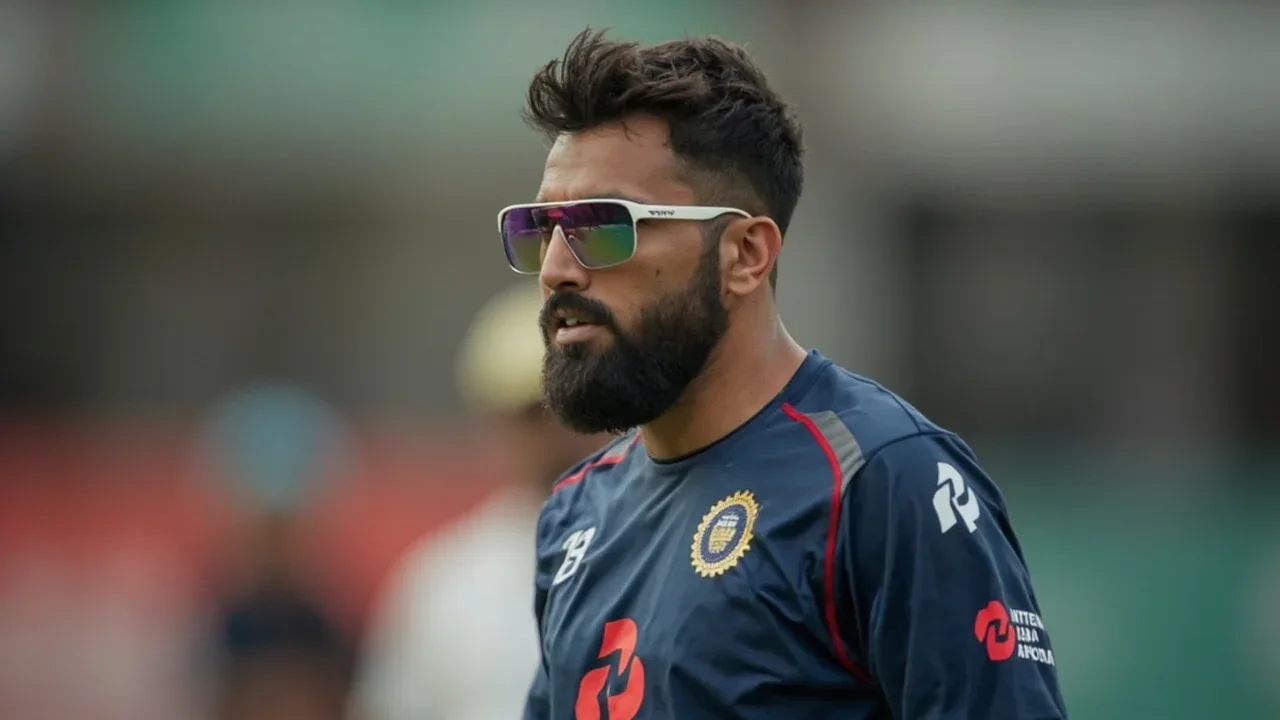
Russel Arnold, the former Sri Lanka all-rounder who now works the international circuit as a broadcaster and coach, told IANS in a Sony Sports Network virtual interaction on Thursday that India will not pick their spinner for the Colombo second Test until the support staff have walked the Sinhalese Sports Club practice square on Friday morning. Arnold framed the call as a pitch question, not a form question, and pointed to the difference between what Kuldeep Yadav needs and what Saransh Jain brings.
India go into the second Test with a 1-0 lead after winning the Galle opener by 165 runs. That Galle win was India's 600th men's Test, a number the BCCI formally recorded at the end of the match. The Galle surface took turn from the first session, which is the only reading the public has had of how India plan to bowl in this series.
The Colombo second Test begins on Sunday 23 August 2026 at 10:00 AM IST, with the Sony Sports Network's broadcast confirmed on Ten 2 SD and HD, Ten 3 SD and HD for the Hindi feed, Ten 4 SD for Tamil, Telugu and Kannada commentary, and Sony LIV carrying the stream. Friday's practice session is the last India event open to the media before the toss on Sunday morning.
Why the Galle numbers put Kuldeep Yadav under pressure
Kuldeep Yadav took one wicket across two innings in Galle. The single wicket came in the first innings; he went wicketless in the second. On a surface that turned from ball one and gave India's two off-spinners twelve wickets between them, the wrist-spinner's role as the third spinning option was a quiet one. India's attack in Galle was built around R Ashwin and Washington Sundar, both of whom bowled long spells in the second innings when Sri Lanka were reduced to 47 for 4 in their chase.
The selection logic that follows from those numbers is straightforward. A wrist-spinner is at his most valuable on a surface that offers grip and rough but not extreme turn, where a googly or a wrong'un can rip past the outside edge. On a square turner like Galle, an off-spinner who can land the ball in the same spot ball after ball is a more reliable wicket-taking option than a wrist-spinner whose length can drift on a deteriorating pitch.
Kuldeep's place in the XI is not in doubt on ability. It is in doubt on fit. If Colombo plays differently from Galle, the wrist-spinner is the first name back on the team sheet. If Colombo plays the same way, the conversation about whether India need a third off-spinning option starts before Friday's practice ends.
What Saransh Jain brings that Kuldeep Yadav does not
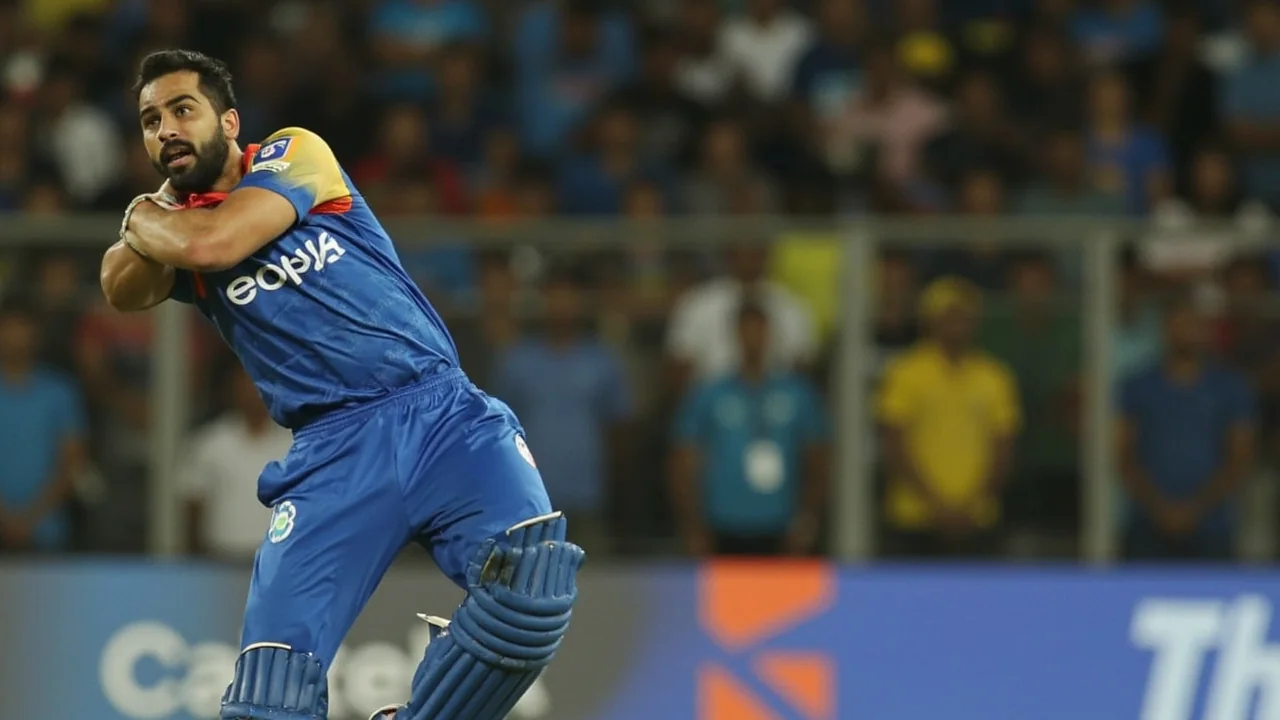
Saransh Jain is the off-spinner from Indore whose first-class record is the reason his name has moved from the India A conversation to the senior squad. Across 47 first-class matches, Jain has 181 wickets at an average below 30, with a batting record of 2,223 runs that includes nine centuries. The numbers are not the only thing. The numbers come with the consistency profile that India's support staff have been looking for in the third spinner slot since the start of the home Test season.
The selection case for Jain does not start with the Galle wicket column. It starts with the Galle run column. Sri Lanka were reduced to 90 for 5 in the first innings and 47 for 4 in the second, both on surfaces that rewarded accuracy more than variety. An off-spinner who can bowl a six-over spell without giving the batter a release boundary is the profile that those collapses imply.
The match-up angle is the one Arnold underlined in his IANS comments. If Colombo offers less turn than Galle, the spinner who can build pressure through line and length is more valuable than the spinner who can buy wickets through variation. Jain's record says he is that profile. The Friday practice will say whether Colombo is that surface.
Arnold's read on the pitch decision
Arnold's IANS comments, delivered through a Sony Sports Network virtual interaction, returned to one idea. The pitch at the Sinhalese Sports Club is not the same surface India bowled on in Galle. The Galle strip turned from the first session. The SSC surface has, on recent evidence, played more conventionally in the second innings of multi-day matches, with the bounce and carry holding up longer than the turn.
If the SSC surface does play conventionally, the argument for Kuldeep strengthens. A pitch that does not turn sharply is the surface where a wrist-spinner has the biggest gap between average spinner and good spinner. If the SSC surface is closer to Galle than the recent record suggests, the argument for Jain takes over. Arnold's reading is that the practice surface India sees on Friday is the single best predictor of which way the call goes.
The interview was conducted virtually rather than at the ground, which kept Arnold's comments at the level of general principle rather than a specific team-sheet forecast. He did not name the player he expected India to pick. He did name the variable that would tell India who to pick.
Sri Lanka's own selection thinking before Colombo
Sri Lanka's selection conversation in Colombo has its own injury list to manage. Dinesh Chandimal is unavailable with a concussion, joining Pathum Nissanka and Kusal Mendis as Galle absentees who will not return for the second Test. Chandimal's absence removes Sri Lanka's most experienced middle-order batter from the line-up that has to survive five sessions on a surface where India took twenty wickets.
Arnold's other specific suggestion was on Sri Lanka's bowling balance. He argued that the home side could bring in off-spinner Ramesh Mendis in place of fast bowler Lahiru Kumara, on the rationale that two spinners working in shorter, fresher spells is a better match-up for India's batting depth than three seamers splitting the workload. The argument does not require the SSC to play like Galle. It only requires it to offer enough turn that two spinners can share twenty wickets without one of them bowling a 25-over spell.
The Galle numbers that frame the case for Sri Lanka to consider the change are the two middle-order collapses. 90 for 5 in the first innings and 47 for 4 in the second innings show that the batting order did not absorb the pressure India's two spinners built. A bowling line-up with one fewer seamer and one more spinner is one way to keep that pressure on.
What Friday's practice session actually tells the support staff
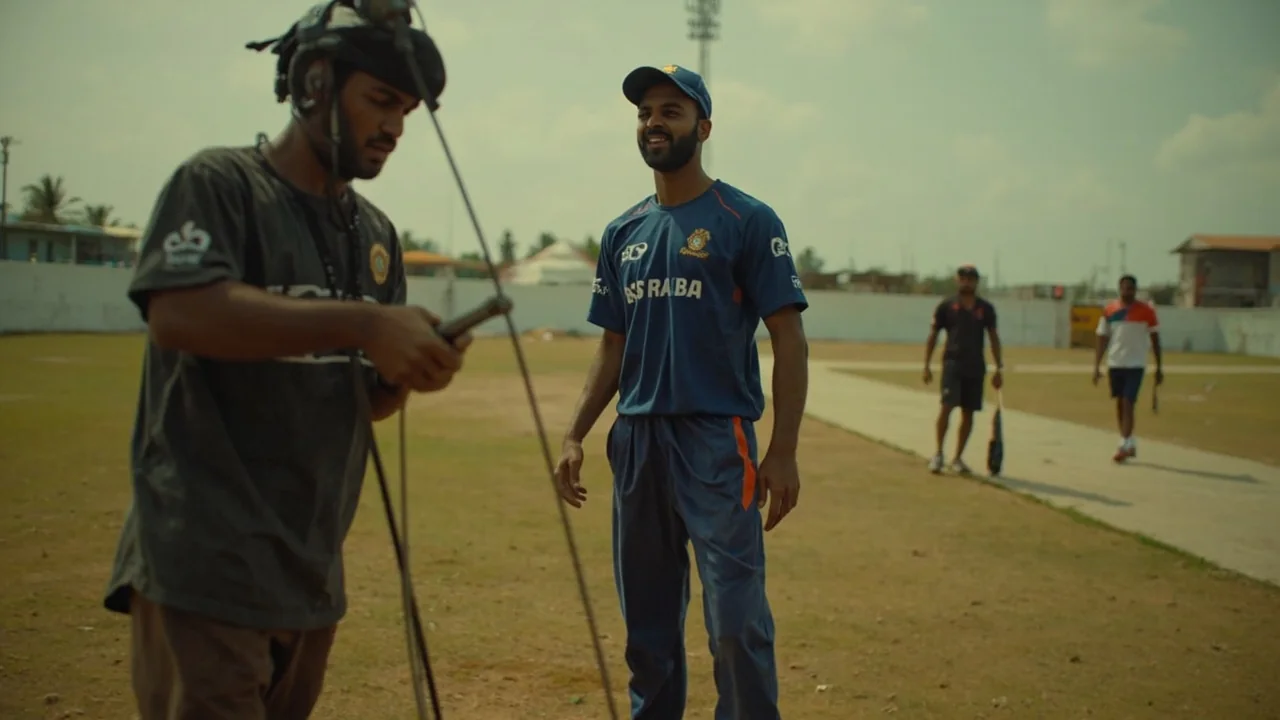
The Friday practice at the SSC is not a public event in the way that a Test match day is. It is a closed training session where the bowlers rotate through the practice squares and the support staff, including head coach Gautam Gambhir, batting coach Sitanshu Kotak and spin-bowling coach Sairaj Bahutule, watch how the ball behaves across different lengths and lines. The information they collect is what feeds the team-sheet meeting that runs into Saturday evening.
A wrist-spinner in a closed net session shows the staff three things. How the ball grips when it lands on a good length, how the rough patches either side of the footmarks are forming, and how much the googly is doing past the right-hander's outside edge. Those three things tell the staff whether the pitch is going to give Kuldeep a wicket-taking option that an off-spinner does not have.
An off-spinner in a closed net session shows the staff a different set of things. How the ball holds its line on a fourth-stump channel, how the batters can use their feet against a spinner who drops it in short, and how the footmarks at the batter's end are likely to develop through day three and day four. Those three things tell the staff whether Saransh Jain's accuracy profile will hold up over a five-day game.
The two-track selection timeline for India
India's selection timeline runs on two tracks at the moment. The first is the formal team-sheet meeting, which is held the evening before the Test and is when the playing XI is signed off. The second is the preparation track, where the support staff and the bowling unit are running scenarios in the nets against left-handers and right-handers, against pace and against spin, in conditions that approximate the surface they expect on match day.
Both tracks run on the same data. The Friday practice is the input. The Saturday team-sheet meeting is the output. Anything said publicly between the two is, in selection terms, noise. The IANS interview with Arnold was published on Thursday afternoon, which puts it before the practice, not after. The practice will have to confirm or contradict his reading before the team sheet is finalised.
There is also a media-management track that runs alongside the formal selection process. India's team management does not pre-announce the XI the way other Test nations do, which means the spin call will not be confirmed until the toss on Sunday morning. Anyone reading the IANS interview as a forecast rather than a framework will be ahead of the actual decision by twelve hours at minimum.
Why the wrist-spin versus off-spin question matters for the rest of the tour
The Colombo call has implications beyond the second Test. India have three more Tests on the 2026-27 subcontinent calendar, two of which are against sides that bat deep and play spin well. The selection data India collect in Colombo will feed back into the squad composition for those series and into the order of the spinners in the India A pipeline.
Jain's case for inclusion is also a case for the wider selection template. India have rotated their third spinner across Ashwin, Washington Sundar, Kuldeep Yadav and Axar Patel over the last twelve months. Adding Jain to that rotation gives the selectors a fifth option with a specific match-up profile, which is the kind of depth India's Test squad has not had since the home summer of 2024.
Kuldeep's case for inclusion is not weaker, just narrower. A wrist-spinner who takes wickets is a match-up asset on surfaces that turn. A wrist-spinner who does not take wickets, on a surface that does not turn, is the easiest bowler to leave out of an XI that already has two off-spinners in it. The Friday practice will tell India whether Colombo puts Kuldeep in the first group or the second.
What to watch in Friday's closed practice
The first thing the broadcast crew and the small media contingent that watches India's practice from the stands will look for is the colour of the SSC surface. A surface with a green tint is the surface where the seamers will get more out of the new ball and the spinners will be expected to hold up an end. A surface with a dry brown tint is the surface where the spinners will be expected to lead the attack from over one.
The second thing is how Kuldeep and Jain bowl in the same net session. The support staff will be looking at whether Kuldeep can land his stock delivery in the same spot on three consecutive balls, and whether Jain can vary his pace enough to keep the batter guessing. Both questions are easier to answer in a closed session than in a press conference.
The third thing is what the batters tell the coaching staff about the surface. India's top order will be facing both spinners in the practice session, and their feedback on how the ball is coming on to the bat is the most reliable single input into whether the match-up favours wrist-spin or off-spin. India's batting unit has played enough on the subcontinent to give that feedback in a way the coaching staff can act on.
What to watch in the run-up to the toss on Sunday
The Saturday team-sheet meeting is the operational deadline. The decision will be communicated through the toss announcement on Sunday morning, with the broadcast on Sony Sports Network carrying the line-up read-out at 9:30 AM IST and the first ball scheduled for 10:00 AM IST. Anything that happens between Friday's practice and Saturday's meeting is preparation, not selection.
For readers tracking the wider international cricket picture, the daily scorecards, ball-by-ball commentary and post-match analysis from the India tour of Sri Lanka sit on the IPL Fantasy King live cricket scores and updates editorial alongside the day-by-day India Test coverage as the Colombo second Test moves into day one.
The selection call will be the first formal confirmation of whether India think the SSC surface is closer to a Galle square turner or a more conventional subcontinental Test surface. If Kuldeep keeps his place, India are reading Colombo as the latter. If Jain makes his debut, India are reading it as the former. The reading will be on the team sheet at 9:30 AM IST on Sunday.
What Arnold's IANS interview has done is frame the conversation in pitch terms rather than form terms, which is the frame the India support staff will be using internally regardless of what is published outside the ground. The first formal checkpoint for the public is Friday's practice. The second is the team-sheet announcement on Saturday evening. The third is the toss on Sunday morning, which is when the public finally sees which way the call went.
Until those three checkpoints pass, the spinner question is exactly what Arnold said it is. A pitch question. The Galle win was India's 600th Test, the Galle wicket column for Kuldeep was thin, and Saransh Jain is waiting on a debut that the SSC surface will either give him or take away. The interview, the practice and the team sheet are the three steps that move the question from press column to playing field.
Sunday's first ball at 10:00 AM IST on the Sony Sports Network feed is when the answer stops being a question of pitch and starts being a question of run-out. The team sheet at the toss is the public version of the support staff's Friday read on the surface. The two reads will match, or the support staff will have moved on the data the public has not yet seen.