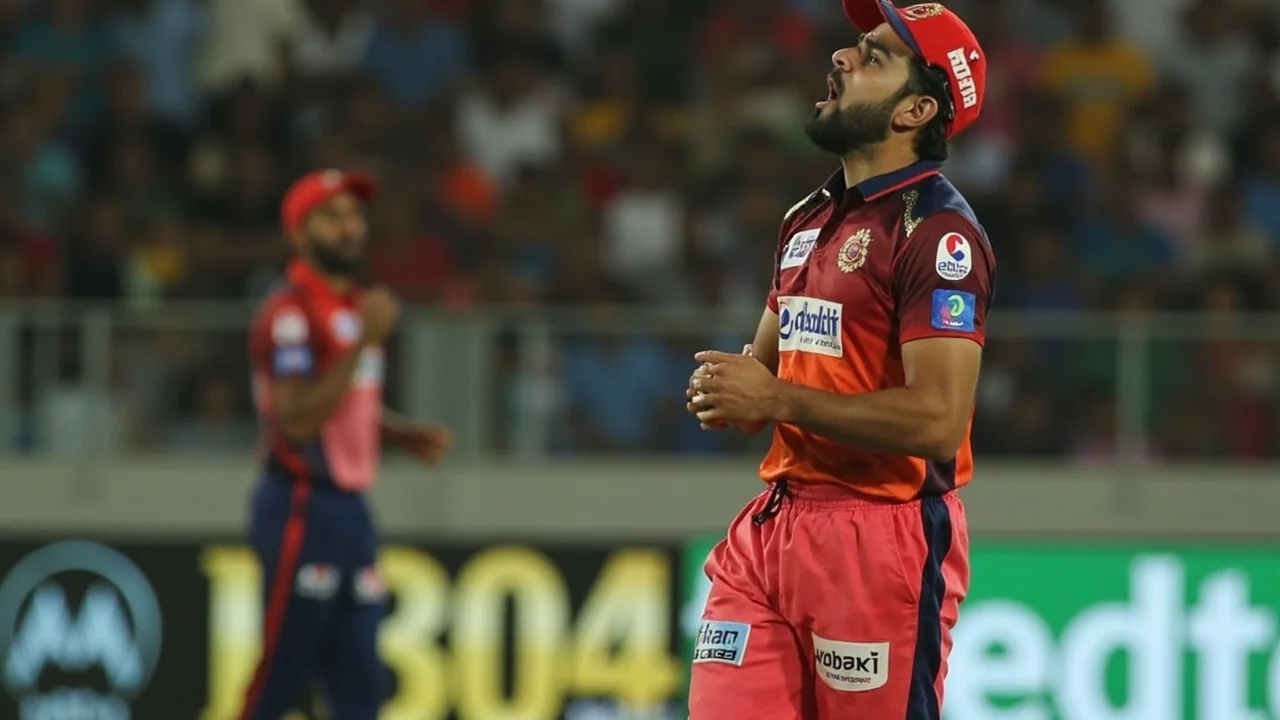
On 4 August 2026 Moneycontrol published a brief that revisited one of the most replayed confrontations in IPL history. Former international umpire Anil Chaudhary, speaking on JioHotstar, walked viewers back through the 11 April 2013 Royal Challengers Bengaluru vs Kolkata Knight Riders fixture at M. Chinnaswamy Stadium. RCB captain Virat Kohli had just been dismissed during the run chase. Kohli walked back toward the pitch. KKR captain Gautam Gambhir was somewhere in his eyeline. What followed was the kind of heated exchange that ends with the on-field umpires stepping between two captains.
Chaudhary was one of the two on-field umpires that night. His Moneycontrol reflection is unusual because it does not flatten the moment into a generic sledging story. It tells the story of the umpire sensing what was coming. He told JioHotstar: “I knew something like that would happen because all of them from the North play with aggression.” He added a second line that has done the rounds since the article went live: “There’s a limit, and it shouldn’t be crossed.”
What follows is a dated reading of the Moneycontrol record: the on-field sequence as Chaudhary remembered it, the same umpire’s defence of Kohli’s character, the 2023 sequel that ran ten years after the original, and the present-day positions of the two men in August 2026. The wider IPL 2026 coverage sits under IPL 2026 news, schedules and match analysis.
What Chaudhary saw on 11 April 2013
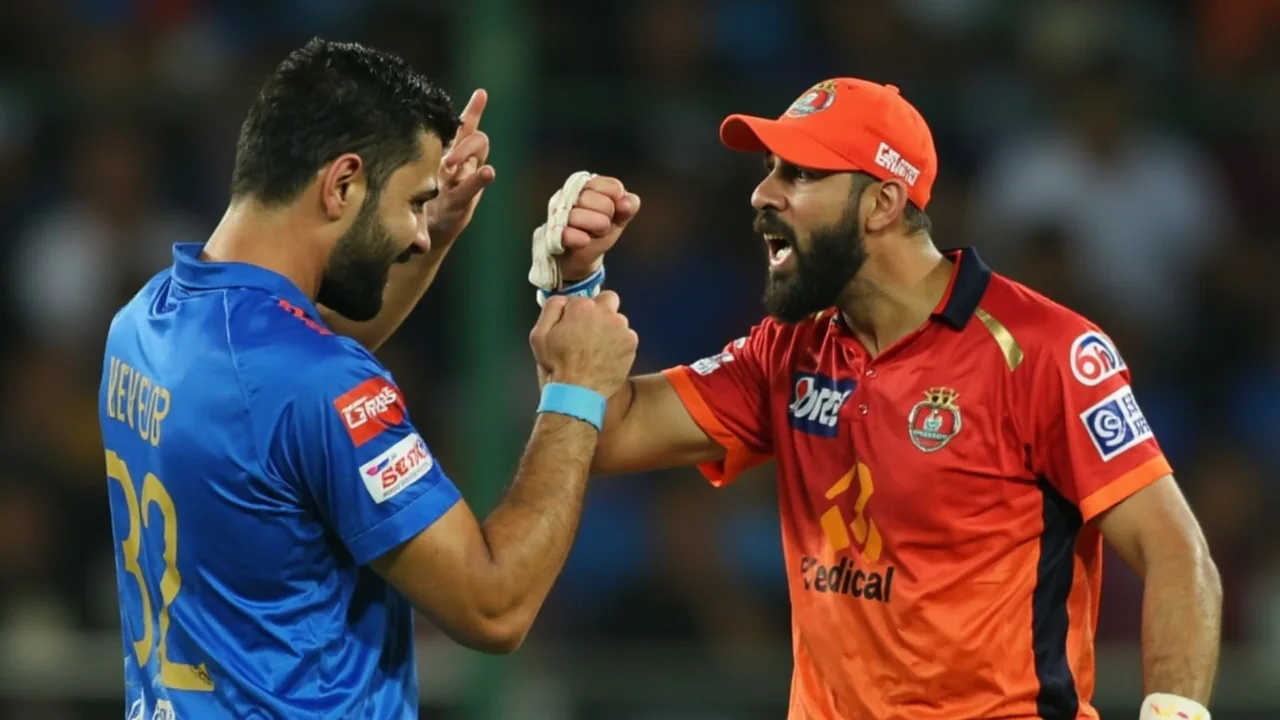
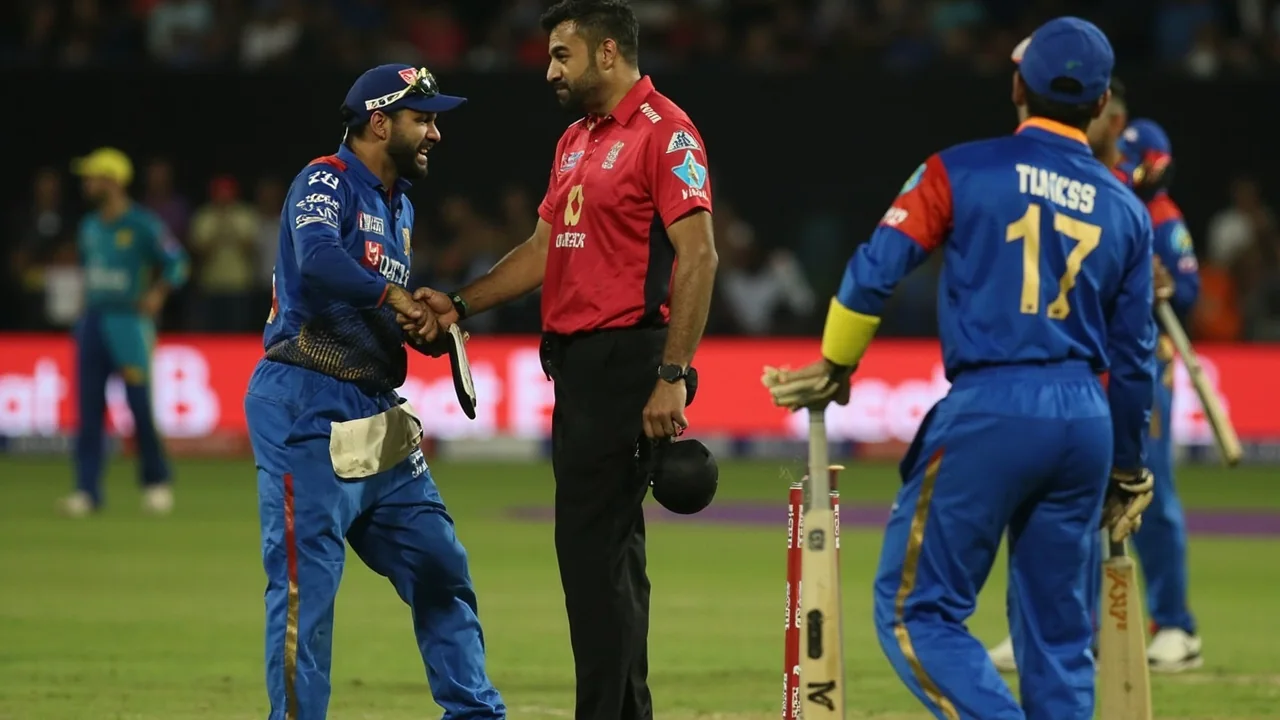
Chinnaswamy Stadium is a venue that rewards momentum and amplifies frustration. RCB were chasing. Kohli got out. He began walking back. Gambhir was inside his line of sight. According to the Moneycontrol summary of Chaudhary’s JioHotstar interview, the two came together, words escalated, and Chaudhary and his colleague moved in before the confrontation crossed into pushing. Players and team-mates closed the gap. The umpires separated the captains. The match resumed.
The reason Chaudhary’s retelling carries weight is sequencing. He frames the confrontation as something he sensed before it broke out, not a sudden ambush he had to break up cold. The “North Indian aggression” line is uncomfortable for modern readers and is itself worth scrutiny. It groups a large set of players from multiple states under one temperament claim. But as Chaudhary’s account is recorded, it was offered as an on-field working observation rather than a coaching manual. The follow-up line — that there is a limit which should not be crossed — is the part he actually anchored to.
Moneycontrol noted that the 2013 incident was widely described as one of the major scandals of that IPL season. That language matters. It is not a private disagreement being inflated by highlight reels. It is the contemporaneous reputation of the incident at the time. Within the season it was treated as a confrontation serious enough to warrant the on-field umpire remembering it thirteen years later for a national broadcaster.
The defence of Kohli that Chaudhary also offered
The umpire did not stop at the confrontation. He used the JioHotstar interview to push back on the popular reading of Kohli as the aggressor. “He doesn’t have any malice,” Chaudhary said. He added, “If you’re right, he’ll give you a thumbs up too.” That last line matters. It is not blanket praise. It is a conditional assessment: Kohli is hard, but he is fair when the call goes against him.
Chaudhary also used a credential that carries weight in umpiring circles. He has officiated Kohli’s matches since childhood. That is a long audit window. A young Kohli in age-group cricket, a teenage Kohli in Under-19 cricket, a senior Kohli in domestic red-ball cricket, an India Kohli across formats, and an IPL Kohli across multiple franchises. The Chaudhary assessment is not built on one night at Chinnaswamy. It is built on a tracking arc that runs through most of Kohli’s senior career.
The asymmetry between Chaudhary’s two framings is worth noting. The North-Indian-aggression line is offered as a working observation about the temperature of the room. The Kohli character line is offered as a personal audit built over many years of standing at the striker’s end. The first is an umpire’s ambient read. The second is an umpire’s long-run assessment. The Moneycontrol record keeps both, which is the right editorial choice. Neither cancels the other, and the 2013 incident is more honestly explained by holding both at once.
The 2023 sequel that confirmed the rivalry had not cooled
Moneycontrol’s 4 August 2026 piece does not present the 2013 incident in isolation. It anchors the confrontation to a second flashpoint ten years later. In May 2023, Royal Challengers Bengaluru beat Lucknow Super Giants in an IPL fixture. Post-match handshakes between Kohli and Gambhir — then LSG mentor — heated up again. During the same match Kohli had also exchanged words with LSG pace bowler Naveen-ul-Haq. The same temperature, different venue, different teams, different roles.
The 2023 episode matters because it told the public that whatever was settled in 2013 was not, in fact, settled. A handshake line that needs separating is not a settled line. A bowler batter exchange that needs a referee is not a one-off. The Chaudhary interview lands at a moment when the Kohli-Gambhir ledger has had a fresh entry, and the umpire’s on-field observation reads differently when the 2023 incident is treated as a continuation rather than a coincidence.
Two structural points also fall out of the 2023 sequel. First, Gambhir was no longer an on-field captain by then. He was a mentor. The handshake confrontation came from the boundary edge, not the middle. That is a different authority geometry. Second, Kohli was RCB captain. The on-field hierarchy was the same as in 2013. The 2023 flashpoint shows the friction survives even when one man’s official position in the game has changed.
Where the two men sit in August 2026
The Moneycontrol record frames the present-day positions of both men within the same article. As of August 2026, Gambhir is the head coach of the Indian cricket team. The mentorship role that brought him to Lucknow Super Giants has graduated into the senior India job. Kohli continues to play for Royal Challengers Bengaluru in the IPL. The 2013 captain-vs-captain geometry has therefore transformed into a coach-vs-player geometry at the international level, with the IPL still placing Kohli inside an RCB shirt that Gambhir used to oppose from the KKR dressing room.
That structural change matters for any reading of the Chaudhary interview. The umpire is talking about a 2013 moment between two young captains. By 2026, one of them is responsible for the dressing-room culture of the India team that the other is still trying to break into as a senior batter. The intensity does not always survive such a structural pivot. That it has — across the 2023 LSG flashpoint and the periodic press-conference friction — is itself a small piece of evidence for Chaudhary’s “limit” framing.
For Indian cricket readers, the practical read is that the Chaudhary interview does not relitigate the 2013 moment in isolation. It places the moment inside a thirteen-year arc. The arc runs from 2013 Chinnaswamy to 2023 LSG handshakes to the August 2026 commentary on JioHotstar. Inside that arc, Chaudhary’s two quotables carry different weights. The aggression observation is an umpire’s ambient read of one night. The limit line is a long-run framing of the boundary that the two careers have repeatedly approached without, in the umpire’s accounting, fully crossing.
What the Chaudhary record leaves open
A retrospective earns its keep when it separates the documented from the implied. The documented record from Moneycontrol is precise on three points: Chaudhary officiated the 2013 fixture, sensed the confrontation coming, and stepped between the two captains. It is also precise on the 2023 sequel at Lucknow, with the LSG handshake flashpoint and the Naveen-ul-Haq exchange during the match. It is precise on the August 2026 roles: Gambhir as India head coach, Kohli as an RCB player in the IPL.
What the record does not close is whether the 2013 incident is best read as a one-off or as the first move in a long pattern. Chaudhary’s own framing leans toward the second reading, by virtue of the 2023 sequel being included in the same article. The umpire’s quote about Kohli not having malice, however, pulls in the opposite direction — suggesting that the 2013 heat was situational rather than character-driven. Both readings can sit inside the same record. Neither is forced by the source.
The wider cricket-news angle is also worth naming. The 2013 incident is a useful historical marker not because it was the most violent on-field moment in the IPL, but because it has stayed replayable. Replayable moments tend to be ones where both sides have a defensible position. Kohli was dismissed and angry. Gambhir was fielding captain and vocal. The umpire was close enough to break it up. None of them is wrong in a way that cancels the others. That balance is why the 2013 episode keeps getting pulled back into IPL commentary thirteen years later, including in a 2026 Moneycontrol piece that runs on a national broadcaster’s interview.
A clean chronology from the source
Fixed to the Moneycontrol record and the JioHotstar interview it cites, the chronology runs as follows. On 11 April 2013, Royal Challengers Bengaluru hosted Kolkata Knight Riders at M. Chinnaswamy Stadium in a regular-season IPL fixture. RCB were chasing. Kohli was dismissed. While walking back, he clashed verbally with Gambhir. Players and match officials intervened. The confrontation did not escalate into a physical exchange. The umpires managed the moment in real time and the match continued.
In May 2023, ten years after the original, Royal Challengers Bengaluru played Lucknow Super Giants. Gambhir was in the LSG dressing room as mentor, not on the field. Post-match handshakes between Kohli and Gambhir escalated again. During the same fixture, Kohli had also exchanged words with LSG pace bowler Naveen-ul-Haq. The on-field temperature in 2023 replayed the 2013 pattern, but with different roles, different teams, and a different match official cohort.
On 4 August 2026, Moneycontrol published its article drawing on Anil Chaudhary’s JioHotstar interview. The interview carried the limit line, the North-Indian aggression observation, the no-malice framing of Kohli, and the present-day positions of both men. That is the visible record. The Moneycontrol summary does not add dispute-resolution details for the 2013 fixture beyond the umpire intervention. It does not record any formal sanction against either player for the 2013 clash. It does not record any formal sanction against either man for the 2023 incident either. The textual record is the umpire’s account, the broadcaster’s interview, and the chronicler’s brief.
The lasting read
On 4 August 2026, Moneycontrol ran Anil Chaudhary’s JioHotstar reflection on the 11 April 2013 Chinnaswamy Stadium clash between Virat Kohli and Gautam Gambhir. Chaudhary was on-field that night. He said he had sensed the confrontation before it broke out. He offered a working observation about North-Indian aggression. He anchored the moment to a limit that he said should not be crossed. He defended Kohli’s character. He put the original flashpoint next to the 2023 Lucknow sequel.
As of August 2026, Gambhir is the head coach of the Indian cricket team and Kohli continues to play for Royal Challengers Bengaluru in the IPL. The two careers have moved in different directions since 2013. The rivalry has not moved at all. Chaudhary’s interview is a useful historical marker precisely because it does not pretend the temperature has cooled. It names the limit. It also names the people who keep approaching it.
Read as history rather than breaking news, the piece is a cleaner read than most of the 2013 footage still in circulation. The Chaudhary account is an umpire’s working memory, not a fan’s highlight reel. It does not romanticise the heat. It does not pretend the heat has gone. It is a record of one night in 2013, retold by someone who was standing close enough to step in, with the full knowledge that thirteen years later the same friction is still replayable inside the IPL.